24 May 2026
Equity Tactics from 7-Card Stud Meet Slot Strategies on Regulated Betting Markets
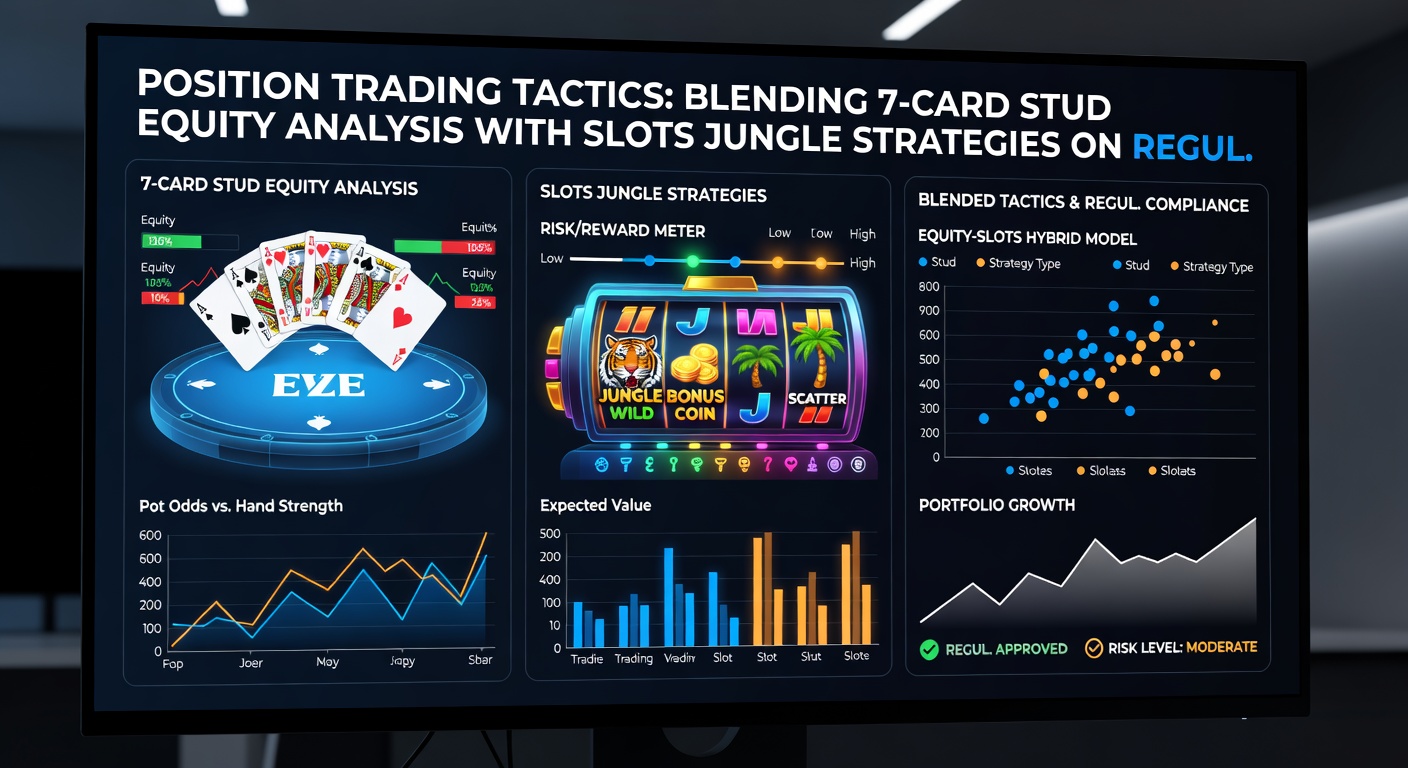
 Data from licensed platforms indicates that participants increasingly apply position trading methods drawn from both 7-card stud equity calculations and slot machine performance metrics. These approaches treat open hands and reel sequences as tradable positions rather than static bets, allowing adjustments throughout a session on exchanges that operate under formal oversight. Regulated venues structure these activities through order books where users buy and sell exposure to specific outcomes. Equity analysis in 7-card stud begins with known cards and community reveals, calculating percentages for each remaining street while factoring in opponent ranges and pot sizes. Traders convert those percentages into position sizes that scale with perceived edge, then hedge or exit as new information arrives. Slots jungle environments contribute a parallel framework centered on return-to-player percentages, hit frequency, and volatility indexes. Participants monitor sequences of spins as discrete trading periods, entering long or short positions based on observed deviation from theoretical payout curves. When combined with stud-derived equity tools, the result is a hybrid model that tracks both card probabilities and reel distribution patterns within the same interface. As of May 2026, several exchanges reported elevated volume in these blended instruments following software updates that display real-time equity meters alongside slot performance dashboards. Observers note the updates reduced latency between data feeds and order placement, enabling faster position adjustments during live sessions.
Core Components of the Blended Model
Position sizing draws directly from stud equity formulas that weigh outs against total unseen cards, then modulates those figures according to slot volatility bands. A trader holding a made hand with strong equity might scale exposure upward, while simultaneously monitoring a linked slot position whose recent hit rate has drifted below its published average. Both positions sit in a unified ledger that marks gains or losses against a common risk unit.
Order types available on these platforms mirror standard equity markets, including limit orders for precise entry prices and stop-loss triggers tied to equity thresholds. When a stud equity percentage drops below a preset level, the system can automatically reduce or close the associated slot position to preserve overall capital allocation.
Regulatory Framework and Platform Requirements
Exchanges must satisfy licensing conditions set by bodies such as the Nevada Gaming Control Board and the Malta Gaming Authority, which mandate transparent order matching, audit trails, and segregation of client funds. These rules extend to the display of equity calculators and volatility indexes, requiring independent verification of the underlying algorithms before deployment.
Industry reports from the Canadian Gaming Association highlight that compliance audits now include sample reviews of blended trading sessions to confirm that displayed equity values align with published game rules. Platforms failing these checks face temporary suspension of the hybrid instruments until corrections are verified.
Practical Execution Examples
One documented sequence involved a participant entering a 7-card stud position with 62 percent equity against two opponents, then pairing that exposure with a slot whose recent 500-spin sample showed a 4.2 percent positive deviation from its theoretical return. The combined position remained open across three stud streets and 180 additional spins before partial profit-taking occurred when stud equity fell to 41 percent.
Another case tracked through exchange records showed hedging activity where a short slot position offset an overextended stud draw. The slot volatility index had shifted into a high-variance band, prompting the trader to sell exposure rather than increase stud commitment. Net result across the session reflected the offsetting mechanics rather than outright directional bets.
Data Integration and Risk Controls
Platform APIs feed both stud equity outputs and slot performance statistics into a single risk engine. Position limits scale according to the combined variance of the two asset classes, with higher volatility readings triggering automatic margin adjustments. Research compiled by the University of Nevada, Reno gaming laboratory demonstrates that such integrated limits reduce session-level drawdowns compared with isolated poker or slot play on the same capital base.
Market depth indicators reveal steady liquidity in these instruments during peak hours, with bid-ask spreads typically narrower than those observed in standalone poker cash tables or high-volatility slot sessions. This liquidity stems from overlapping participant pools that migrate between stud and slots within the same exchange environment.
Conclusion
Position trading that merges 7-card stud equity analysis with slots jungle metrics operates within defined regulatory boundaries on licensed exchanges. The approach relies on real-time data feeds, standardized order types, and integrated risk engines that treat both card probabilities and reel distributions as adjustable positions. As platforms continue to refine these tools, the structure remains anchored in the compliance requirements of multiple oversight bodies and the observable behavior of participants who move capital across both game types within unified ledgers.