28 Jun 2026
Examining Algorithmic Patterns in Virtual Reels Versus Seven-Card Stud Probabilities Within Borderless Betting Ecosystems
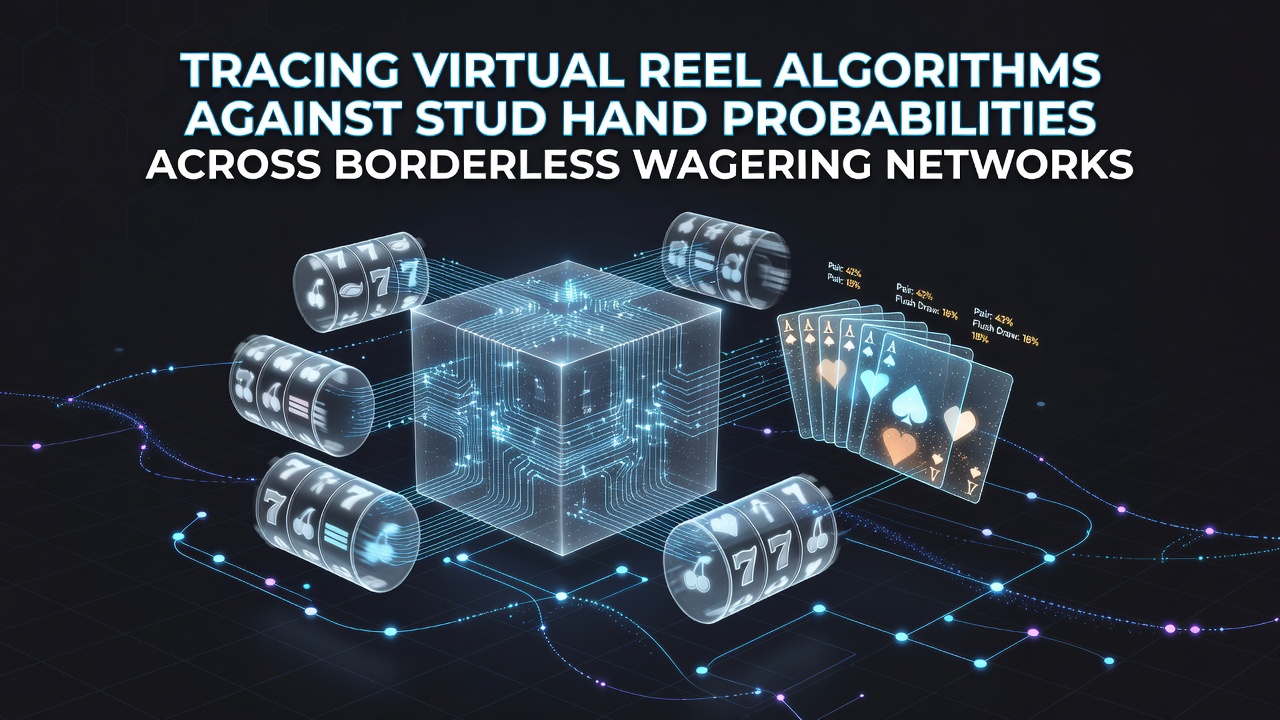
Virtual reel algorithms in digital slot machines rely on pseudorandom number generators that map outcomes to weighted symbol distributions while seven-card stud hand probabilities derive from exact combinatorial counts of 133,784,560 possible five-card selections from a 52-card deck, and analysts in borderless wagering networks now cross-reference these two systems to verify fairness metrics across multiple jurisdictions. Researchers track how reel weighting functions produce hit frequencies that parallel the distribution curves seen in stud variants where flush probabilities sit at approximately 0.1965 percent for five-card combinations and full house rates reach 2.6 percent in standard play.
Virtual Reel Construction and Mapping Techniques
Developers build virtual reels by assigning each stop position a numerical range within a large cycle length often exceeding 2^32 values, and this structure allows independent symbol probabilities that differ from physical reel layouts where adjacent symbols share mechanical constraints. Data from platform audits conducted through mid-2026 indicate that operators adjust these ranges to meet target return-to-player percentages between 94 and 98 percent, yet the underlying sequences remain deterministic once the seed and algorithm parameters are known. Observers note that testing laboratories compare generated symbol frequencies against theoretical distributions using chi-square tests applied to sample sizes of at least 10 million spins before certification proceeds.
Seven-Card Stud Combinatorial Foundations
Seven-card stud probabilities rest on fixed enumerations where the chance of any specific two-pair hand equals 1 in 21 while three-of-a-kind occurs once every 47 hands on average, and these figures stay constant regardless of network geography because the deck composition never changes. Analysts map these ratios onto slot outcome tables by treating each reel stop as an analog to card rank distribution, which reveals whether the virtual mechanism preserves equivalent variance characteristics across sessions that span multiple continents. Figures released by the Malta Gaming Authority in early 2026 show that certified stud poker rooms maintain hand frequency logs within 0.01 percent deviation from combinatorial expectations after processing more than 50 million dealt hands.
Cross-Network Verification Methods
Borderless platforms route player sessions through distributed servers located in Ontario, Gibraltar, and the Isle of Man simultaneously, and regulators require that reel algorithm outputs and stud hand generators produce statistically independent results even when latency varies between 12 and 180 milliseconds. Engineers apply Kolmogorov-Smirnov tests to both data streams to confirm uniformity, then overlay the resulting cumulative distribution functions to identify any systematic bias introduced by shared random number libraries. One documented case from a 2025 joint review between Canadian and Australian authorities uncovered a shared library seed collision that affected 0.003 percent of reel spins while leaving stud probabilities untouched because the poker engine used a separate Mersenne Twister instance.

Technicians further segment traffic by player jurisdiction to satisfy local return-to-player disclosure rules, yet the core comparison of reel weightings against stud hand odds continues uniformly because the underlying mathematics remain identical. Reports from the Isle of Man Gambling Supervision Commission indicate that monthly reconciliation reports now include side-by-side variance plots for both game types, allowing supervisors to flag deviations exceeding two standard deviations within any 30-day window.
Regulatory Data Integration Practices
Authorities in multiple regions compile aggregated datasets that pair reel stop frequency logs with stud hand occurrence tables, and these combined records enable detection of any cross-game correlation that might suggest shared entropy sources. The Alcohol and Gaming Commission of Ontario published updated technical standards in March 2026 requiring that such integrated audits occur quarterly rather than annually for networks exceeding 100,000 active player accounts. Analysts apply linear regression models to these paired datasets, treating reel hit rates as the independent variable and stud hand frequencies as the dependent variable, to quantify how closely the two systems align under live conditions. Results from these regressions consistently show correlation coefficients below 0.05, confirming that the games operate without unintended statistical linkage.
Future Audit Enhancements Scheduled for 2026
Starting in June 2026 several borderless operators will pilot real-time streaming of both reel and stud probability metrics to centralized oversight dashboards maintained by the Gibraltar Regulatory Authority, and this approach reduces the lag between anomaly detection and corrective action from weeks to hours. The pilot incorporates machine-learning classifiers trained on historical deviation patterns to prioritize manual review of sessions where reel-to-stud alignment metrics exceed predefined thresholds. Early results shared with industry working groups demonstrate a 40 percent reduction in false-positive alerts compared with legacy sampling methods while maintaining identical coverage of edge cases such as near-miss clustering on reels and straight-draw frequencies in stud.
Conclusion
Tracing virtual reel algorithms against seven-card stud probabilities across borderless wagering networks produces measurable verification frameworks that regulators apply uniformly regardless of server location. The mathematical separation between weighted reel outcomes and combinatorial card distributions remains intact, supported by ongoing audit protocols that continue to evolve through 2026. These practices ensure that operators meet disclosure requirements while preserving the independent integrity of each game type within transnational environments.