14 Jul 2026
How Stud Poker Decision-Making Principles Shape Slot Bonus Mechanics in Europe's Licensed Gaming Environments
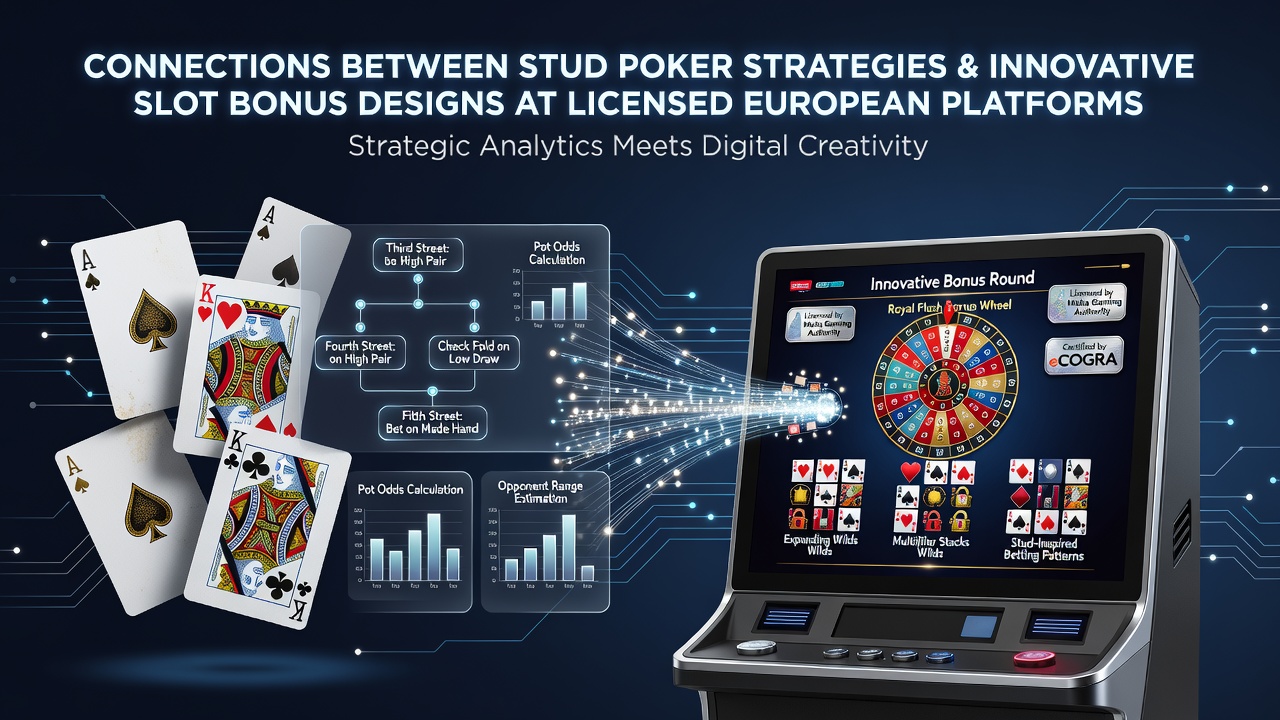
Seven-card stud involves tracking visible cards, calculating remaining probabilities, and adjusting bets according to revealed information while slot bonus systems at licensed European platforms now embed comparable probability layers into their feature triggers and multiplier sequences.
Operators integrate these elements to create bonus rounds where players face incremental choices that mirror the information-gathering process central to stud variants and data from regulatory filings shows increased deployment of such hybrid mechanics across multiple jurisdictions since 2024.
Core Stud Poker Tactics Translated into Bonus Architecture
Players in stud poker evaluate upcards and downcards to estimate hand strength against opponents and this same sequential assessment appears in slot designs where bonus entry depends on accumulating specific symbols across spins with each step revealing new odds for continued play or escalation. Licensed platforms in Malta and Sweden have tested bonus structures that pause after initial triggers, presenting players with options to continue or collect based on displayed multipliers much like folding or raising when additional cards appear in a stud round.
Research from the European Gaming Institute indicates that these layered triggers reduce random outcomes by incorporating visible state information that players can interpret before committing further spins or stakes.
Probability Mapping and Information Asymmetry in Modern Features
Stud strategies rely on counting remaining cards of needed ranks and suits to refine decisions and slot developers apply parallel counting systems inside bonus games where the number of remaining free spins or the distribution of multiplier values becomes partially visible after each selection. One European operator introduced a bonus ladder in which players select from concealed cards that reveal escalating multipliers while the system displays how many high-value cards remain in the pool, creating a dynamic that rewards tracking and memory in ways previously limited to table games.
Figures released by the Swedish Gambling Authority in early 2026 documented a measurable uptick in session length when such visible-state mechanics were active compared with purely random bonus distributions.
Case Examples from Regulated Markets
Platforms holding licenses from the Malta Gaming Authority have deployed bonus wheels segmented into stud-inspired tiers where each segment represents different risk-reward profiles and players may decline a spin to lock in current gains or proceed for higher potential much as they would check or bet on fourth street. Another implementation uses a running count of collected suit symbols that influences the frequency of subsequent bonus entries, directly echoing the suit-tracking component of seven-card stud.

By July 2026 several additional operators had integrated similar count-based progression systems after observing performance data from earlier deployments and industry reports from the European Lotteries Association note that these features align with broader responsible gaming frameworks because they surface probability information that players can use to modulate their activity.
Regulatory Context and Design Constraints
European licensing regimes require that all random number generators undergo independent testing and the addition of player-visible state information must still preserve certified randomness for underlying outcomes. Regulators in multiple jurisdictions permit informational overlays provided they do not alter the certified distribution of results and this allowance has enabled developers to borrow stud poker elements without violating fairness standards. Observers note that the approach satisfies both entertainment goals and compliance obligations when implemented within audited frameworks.
Conclusion
The transfer of stud poker tactics into slot bonus architecture continues to evolve within Europe's licensed environment as operators refine how visible information and sequential decisions interact with certified random processes. Data from regulatory bodies and industry associations shows these designs maintain compliance while introducing mechanics that reward observation and probability assessment in formats traditionally associated with table games. Future iterations will likely expand the range of visible-state variables available to players while remaining anchored to the testing and transparency requirements already established across European markets.